
09 Nov 2026
What We Learned at the 90th Asoexport Coffee Summit in Cartagena
 From a visit to the Port of Cartagena to conversations with coffee producers, exporters and global traders, our two days at the 90th Asoexport Coffee Summit offered a close look at the opportunities and challenges shaping Colombia’s coffee industry.
Held in Cartagena on November 5 and 6, 2026, the summit brought together people from across the Colombian coffee supply chain. For us at JA Coffee, it was a chance to learn, reconnect with suppliers and hear different views on the future of Colombian coffee.
A port investing in coffee logistics
Our visit began at the Port of Cartagena. We learned that the port is building a facility designed to speed up the unloading of incoming coffee, as well as a new fumigation facility. The new coffee warehouse is expected to be ready next year.
The port also highlighted its position in global shipping. Cartagena ranked third in the 2023 Container Port Performance Index, which measures container port efficiency. For coffee exporters and importers, efficient handling and logistics infrastructure can make an important difference to how reliably coffee moves through the supply chain.
We also noticed that more Colombian coffee is being shipped in big bags. This format can make coffee easier to handle, improve transport and logistics efficiency, and help reduce costs.
Colombia’s coffee sector wants to grow
At the conference, participants described a sector facing economic and operational pressure. A strong Colombian peso can make exports less competitive and affect what producers receive in local currency. Speakers also discussed security problems in coffee-growing regions and their impact on production.
There was a clear ambition to increase Colombia’s coffee output. Participants said production has remained relatively steady over the past decade, while the global market continues to evolve. The challenge is to produce more without losing the quality and reputation that distinguish Colombian coffee.
Increasing domestic consumption was another part of the discussion. One idea is to encourage more public institutions to serve 100% Colombian coffee.
Proposed IVA changes raise concern
The proposed tax changes were a major concern for people in the sector. One clarification: IVA is value-added tax, not income tax. The 19% rate discussed at the summit relates to a proposal that could change the tax treatment of coffee and certain agricultural goods and inputs. At the time of the conference, it was a proposal, not a tax change already in force.
Participants warned that higher taxes could raise costs for producers and consumers, potentially affecting domestic coffee consumption and the competitiveness of the industry.
Buying coffee in cherry form
One of the most notable initiatives discussed by Germán Alberto Bahamón Jaramillo, general manager of the National Federation of Coffee Growers of Colombia (FNC), was expanding the purchase of coffee cherries.
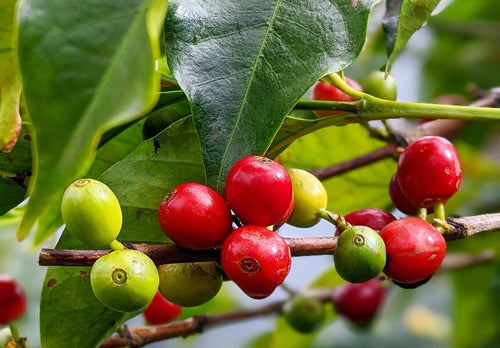
Many producers currently depulp and process coffee on their own farms. Practices can vary, and processing may use more water or resources than necessary. The FNC wants to expand buying points and transformation centers where producers can sell freshly harvested cherries for centralized processing. The aims include more consistent quality, better control of processing, reduced waste and more productive use of coffee byproducts.
I asked an FNC representative whether processing coffee into parchment necessarily adds value for the producer. The representative told me that producers selling cherries would be paid an amount equivalent to what they would receive for the parchment coffee produced from those cherries. If carried through clearly and consistently, that approach could give producers access to centralized processing without reducing their equivalent return.
More value from coffee grown in Huila
We also heard about investment in greater value-added processing in Huila. One part of that effort is the Central de Transformación y Beneficio Jorge Villamil Ortega in Gigante, which processes coffee cherries. It opened in May 2026 with an initial capacity of 35,000 kilograms of cherries per day.
Separately, a second freeze-dried instant coffee plant in Pitalito, Huila, has been proposed. The plan would build on Buencafé, the FNC’s existing freeze-dried coffee operation in Chinchiná, Caldas. Instant coffee can turn Colombian beans into a higher-value finished product; Buencafé’s profits support programs for coffee-growing families. The Pitalito plant was publicly announced as a proposal in 2023, so its development should be understood as a plan rather than a completed project.
New coffee varieties from Cenicafé
Research and new coffee varieties were another important theme. The varieties discussed included Celestra, Castalia and Cocoon, developed through Cenicafé’s research. The work reflects a broader effort to provide producers with more options, combining cup qualities and traits that can support coffee production.
Participants also discussed whether Robusta could have a place in Colombia’s coffee industry, including the possibility of growing it in lower-altitude regions. The idea remains exploratory, but it connects to an existing market reality: some coffee brands in Colombia use imported Robusta in blends with Colombian Arabica.
Global traders debate Robusta
A panel on the future of Colombian coffee brought together David Neumann, CEO of Neumann Kaffee Gruppe; Teddy Esteve, managing director of ECOM Agroindustrial; and Trishul Mandana, managing director of Volcafé. Adriana Mejía of the Global Coffee Platform moderated the discussion.
The panelists did not agree on whether Robusta should become part of Colombia’s coffee production. As we understood the discussion, Neumann opposed the idea, while Esteve and Mandana saw potential, including because Robusta is used in some domestic blends.
They also emphasized that Colombian Robusta would need to compete with established producers such as Brazil and Vietnam. Neumann raised a concern about the possible effect on Colombia’s coffee image, given the negative associations Robusta can carry with some consumers. The discussion left an important question for the industry: how can Colombia explore new markets and production opportunities while protecting its identity as a leading Arabica origin?
What should the FNC and government do?
The panel also discussed the role of public institutions and the FNC in marketing and selling Colombian coffee. Some participants argued that institutional efforts should focus on promotion, education and support for producers, giving farmers the knowledge and tools to improve and expand production.
In that view, commercial distribution and selling could be left largely to established distributors and the free market. The debate raised a broader question about how the FNC should balance its work supporting coffee-growing families with its commercial role in coffee markets.
Women’s voices in coffee
For Karen, the Women in Coffee panel was a sign that the industry is making more room for women as speakers, panelists and leaders. She felt that this kind of representation has not always been part of coffee events.
The producers’ stories were familiar in many ways, because women across Colombia’s coffee communities face similar challenges. What felt different was seeing women who have continued to prepare and educate themselves now taking visible roles as speakers, board members and leaders. The fact that Nestlé Colombia is led by a woman was another encouraging sign. For Karen, this growing representation points to change in the right direction for women and the communities that sustain the industry.
For Felix, the panel also showed how coffee can change lives. The women described how their work helped their families move out of poverty, send their children to school and build better futures. It was a reminder that the impact of coffee reaches beyond the crop and the market to the families and communities behind it.
Our overall impression
We had a great two days in Cartagena. The summit gave us the chance to meet new people, reconnect with existing suppliers, including the director of Coocentral in Huila, and spend time with our current supplier of Salvadoran coffee, who was at the event promoting his products. We also enjoyed visiting Cartagena.
Would we recommend the summit to everyone in coffee? Probably not. It is particularly focused on Colombia’s coffee industry and its institutions, with producers, exporters, logistics and maritime companies, banks and other key stakeholders. We saw fewer roasters and importers, so it may be less useful for people looking primarily for an international sourcing or roasting event.
For us, it was a worthwhile experience this year. Given the summit’s focus and the contacts we were looking to make, though, we are not sure we would attend again next year.
Frequently asked questions
• What is the Asoexport Coffee Summit?
The Asoexport Coffee Summit is a Colombian coffee industry event that brings together producers, exporters, buyers, logistics companies, institutions and other supply-chain stakeholders to discuss the sector’s current issues and future.
• What does it mean to buy coffee in cherry form?
Coffee cherry buying means purchasing the freshly harvested coffee fruit before it is depulped and dried. Centralized processing can help standardize quality and make better use of water, processing capacity and coffee byproducts.
• Will Colombia grow Robusta coffee?
Robusta production in Colombia was discussed as a possibility, including in lower-altitude areas, but it remains exploratory. The debate includes market demand, global competitiveness and the importance of protecting Colombia’s Arabica identity.
• What new coffee varieties were discussed?
Celestra, Castalia and Cocoon were among the varieties discussed in connection with Cenicafé’s research and Colombia’s efforts to develop new options for producers.
Sources: Asoexport: 90th Coffee Summit details, Port of Cartagena: third-most-efficient ranking,Colombia coffee IVA proposal coverage, FNC coffee cherry buying announcement, Huila Government: Gigante coffee transformation center, Second freeze-dried coffee plant proposal in Pitalito, Buencafé company profile and value-added coffee, Cenicafé annual report, Asoexport panel speakers